

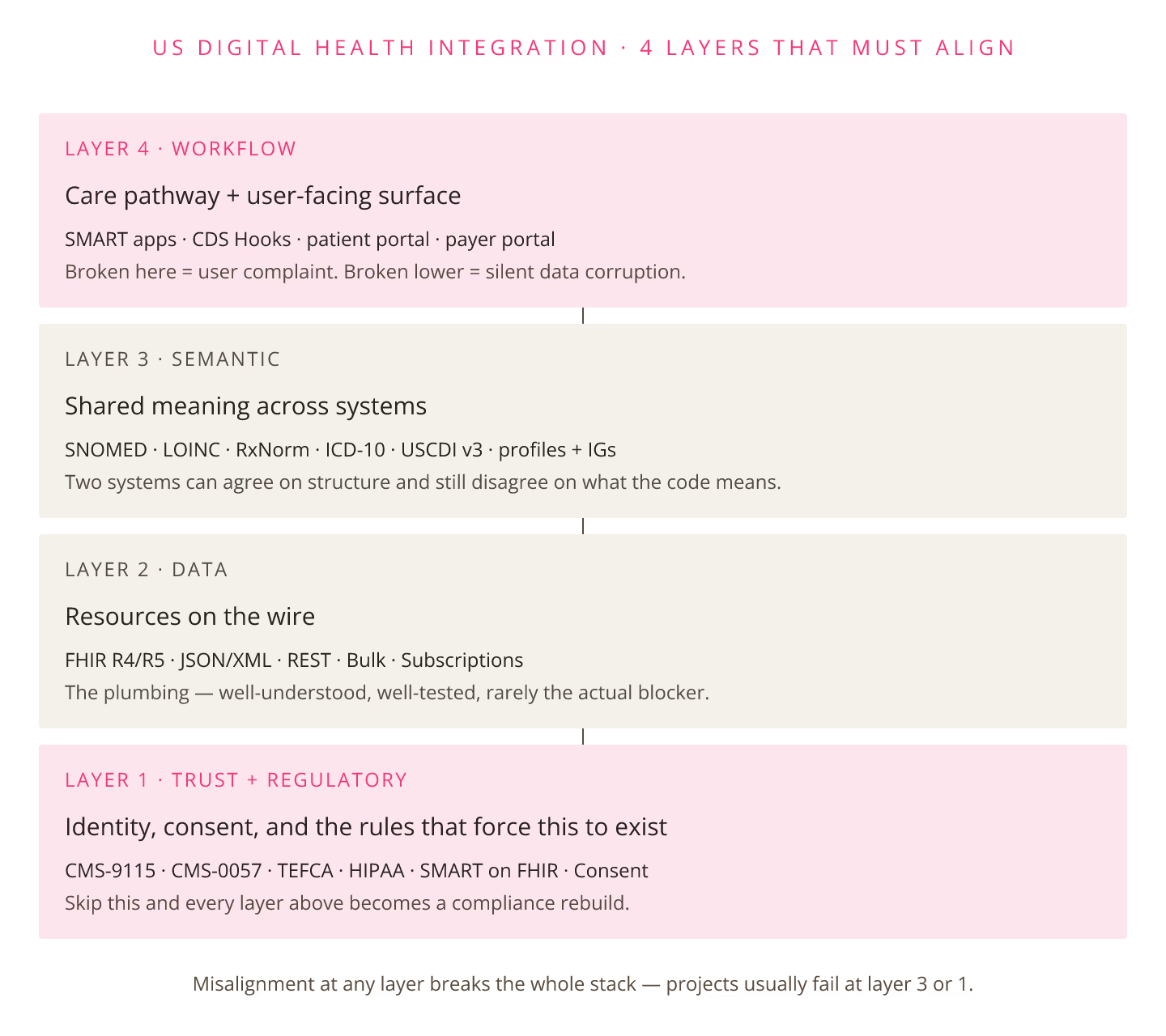
Digital health integrations in US healthcare span four architectural layers. When they align, integrations ship; when they don't, projects stall. Understanding the layers prevents scope confusion.
Layer 1: Data layer
FHIR-based clinical data storage. HAPI, Aidbox, Medplum, commercial EHRs. This is the source-of-truth.
Layer 2: Terminology layer
SNOMED CT, LOINC, RxNorm code systems and their FHIR CodeSystem/ValueSet/ConceptMap representations. Terminology servers manage this layer.
Layer 3: Integration layer
SMART on FHIR launch, Bulk Data `$export`, CDS Hooks. This is where apps meet the data.
Layer 4: Application layer
Clinician-facing UIs, patient portals, analytics dashboards. Consumes data via layer 3.
Alignment failures
| Failure | Symptom |
|---|---|
| Data layer without terminology | Free-text coded fields, analytics broken |
| Data layer without integration | No third-party ecosystem |
| Data layer without application | Just a data store, no clinician value |
| Skipping bulk data | Analytics stuck at REST speed |
| Custom auth instead of SMART | No third-party apps work |
Investment ratio (empirical)
| Layer | Typical spend % |
|---|---|
| Data | 30-40% |
| Terminology | 10-15% |
| Integration | 20-30% |
| Application | 20-30% |
Sites that underinvest in any layer see downstream integrations struggle. The alignment across layers is what makes a deployment feel coherent.
Common misalignment
1. Heavy data layer investment, minimal terminology → quality drift. 2. Heavy application layer, weak integration → third parties can't consume. 3. Custom integration surface → ecosystem fragmentation.
Four layers, aligned investment, coherent delivery.