

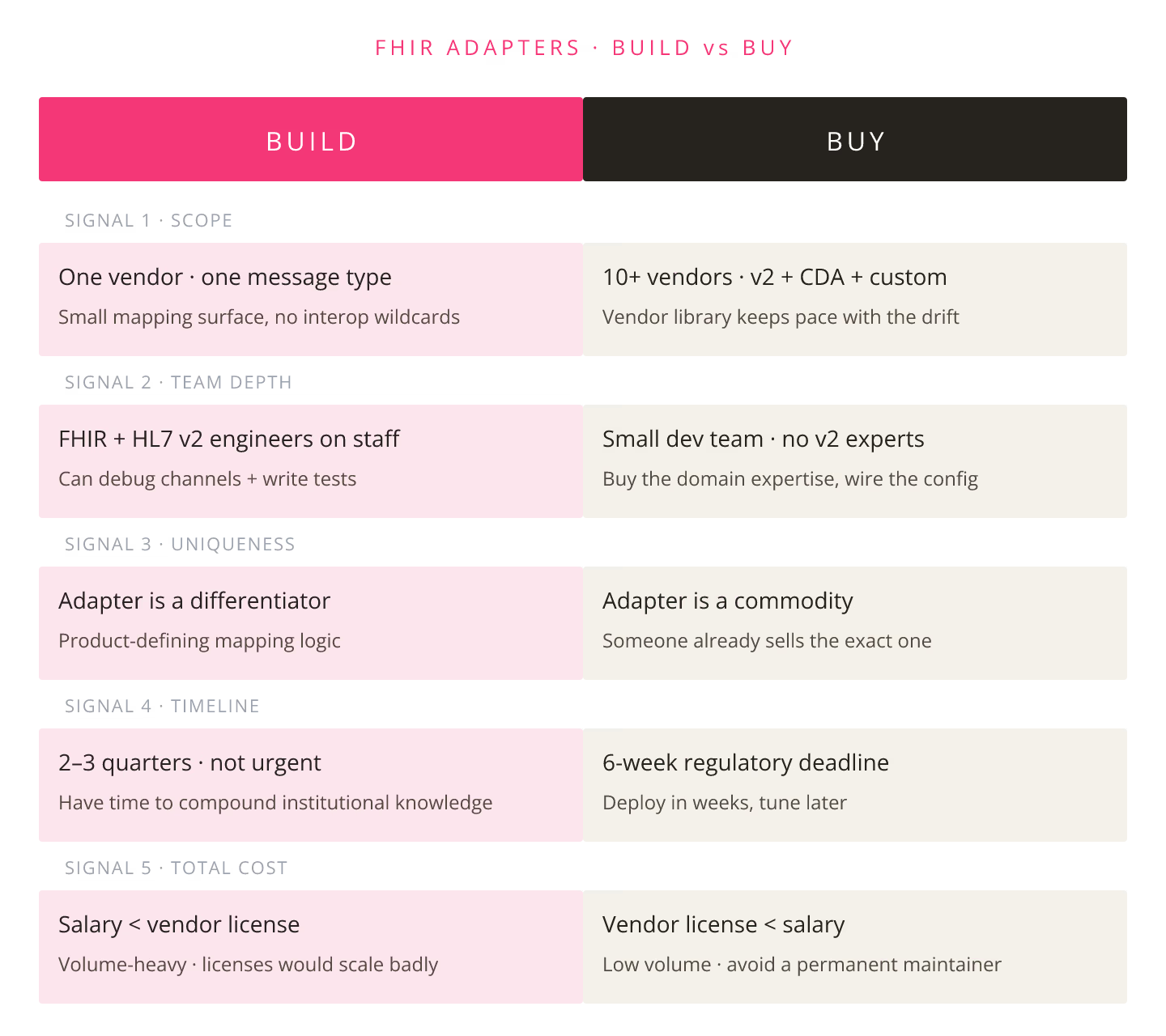
FHIR adapters translate between FHIR and legacy formats — HL7v2, X12, proprietary EHR APIs, custom formats. Build vs. buy decisions matter for both cost and quality.
When to build
1. Proprietary in-house formats. No vendor exists. 2. Highly custom business logic within transformation. Vendors don't fit. 3. Volume high enough to amortize. >1M messages/day. 4. Team has integration engineering strength.
When to buy
1. Standard formats (HL7v2, X12). Vendors solved these. 2. Limited team bandwidth. 3. Compliance-heavy environments. Vendor certification matters. 4. Low-to-medium volume.
Standard adapter categories
HL7v2-to-FHIR converters. The HL7v2-to-FHIR IG defines mappings. Vendors: Rhapsody, Mirth Connect, InterSystems IRIS, HL7v2-to-FHIR (open).
X12-to-FHIR converters. X12 837 (claims), 835 (payment). Vendors: Change Healthcare, Availity, custom.
Proprietary EHR API adapters. Epic FHIR, Cerner Ignite, Athenaclinicals. Vendor-provided.
FHIR-to-Warehouse adapters. For analytics. dbt, Spark, custom.
Build considerations
1. Message throughput SLA. Design for peak load × 2. 2. Retry semantics. Failures are common; retry with backoff. 3. Dead letter handling. Failed messages need review path. 4. Terminology mapping. ConceptMap for cross-vocabulary. 5. Observability. Per-adapter metrics on Prometheus.
Buy considerations
1. Vendor support quality. 24/7 for production. 2. Compliance certifications. SOC 2, HIPAA. 3. Integration with your existing stack. 4. Total cost over 3-year horizon.
Decision matrix
| Situation | Choice |
|---|---|
| Standard HL7v2, low volume | Buy (Mirth Connect open) |
| Standard HL7v2, high volume | Buy commercial (Rhapsody) |
| Proprietary format | Build |
| Complex business logic | Build |
| Compliance-heavy | Buy with certifications |
Adapters are integration infrastructure. Choose deliberately based on volume, complexity, and team capability.